Misty Brae Farm
Facilities, Community and Resources
Two arenas, a working barn, turnout on rolling Loudoun County pasture, and a community of riders who treat the place like home. Everything on this page is the ground our lessons, camps and show teams run on every day.
Built For Working Horses
Good footing, good air, good turnout. The rest is up to the rider.
Every lesson, clinic and show prep session at Misty Brae Farm runs on the same infrastructure: surfaces that stay rideable in Virginia weather, stalls that breathe, and pasture that lets horses be horses between sessions.
Main Barn
Center-aisle barn with matted box stalls, cross-tie grooming bays, a heated tack room and an adjoining wash stall. Fans and full-length aisle doors keep air moving through summer.
Indoor Arena
All-weather footing under LED lighting, with kickboards, mirrors on the short end and a viewing area for parents. Lessons run here through rain, heat and early winter dark.
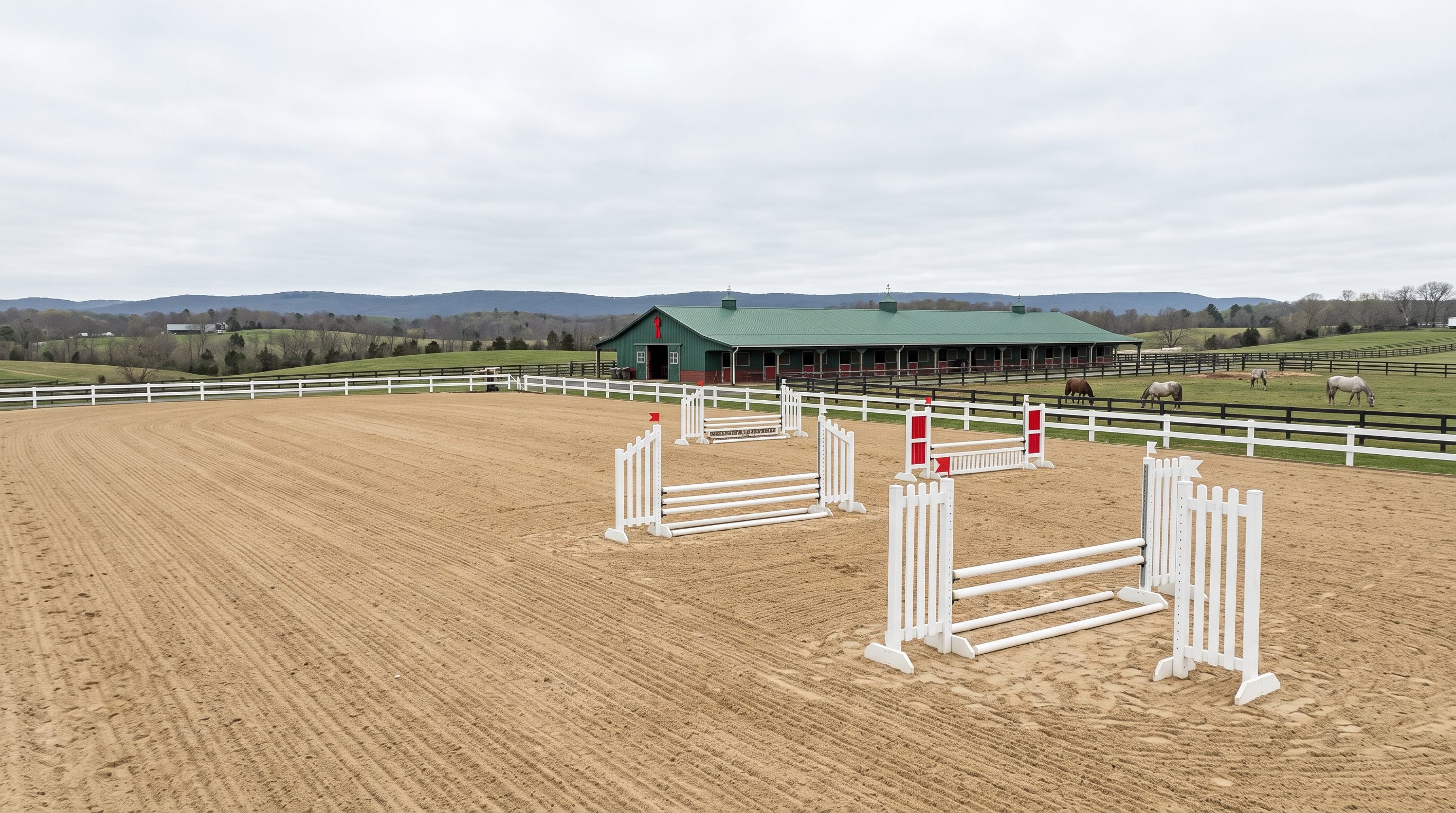
Outdoor Arena
Sand and fiber footing with a full set of painted standards, poles and gymnastic lines. Dressage letters go down for flat work; the jump course reconfigures for schooling shows.
Pastures And Turnout
Board-fenced fields with run-in sheds, automatic waterers and rotational grazing. Individual and small-group turnout is matched to each horse’s workload and herd temperament.

Boarders, lesson riders and clinic groups share the same schedule, so arena time is booked and posted in advance.

The Farm In Full Color
Six frames from an ordinary week at Misty Brae Farm: arenas in use, tack cleaned and hung, and the Loudoun County pasture line at the edge of it all.
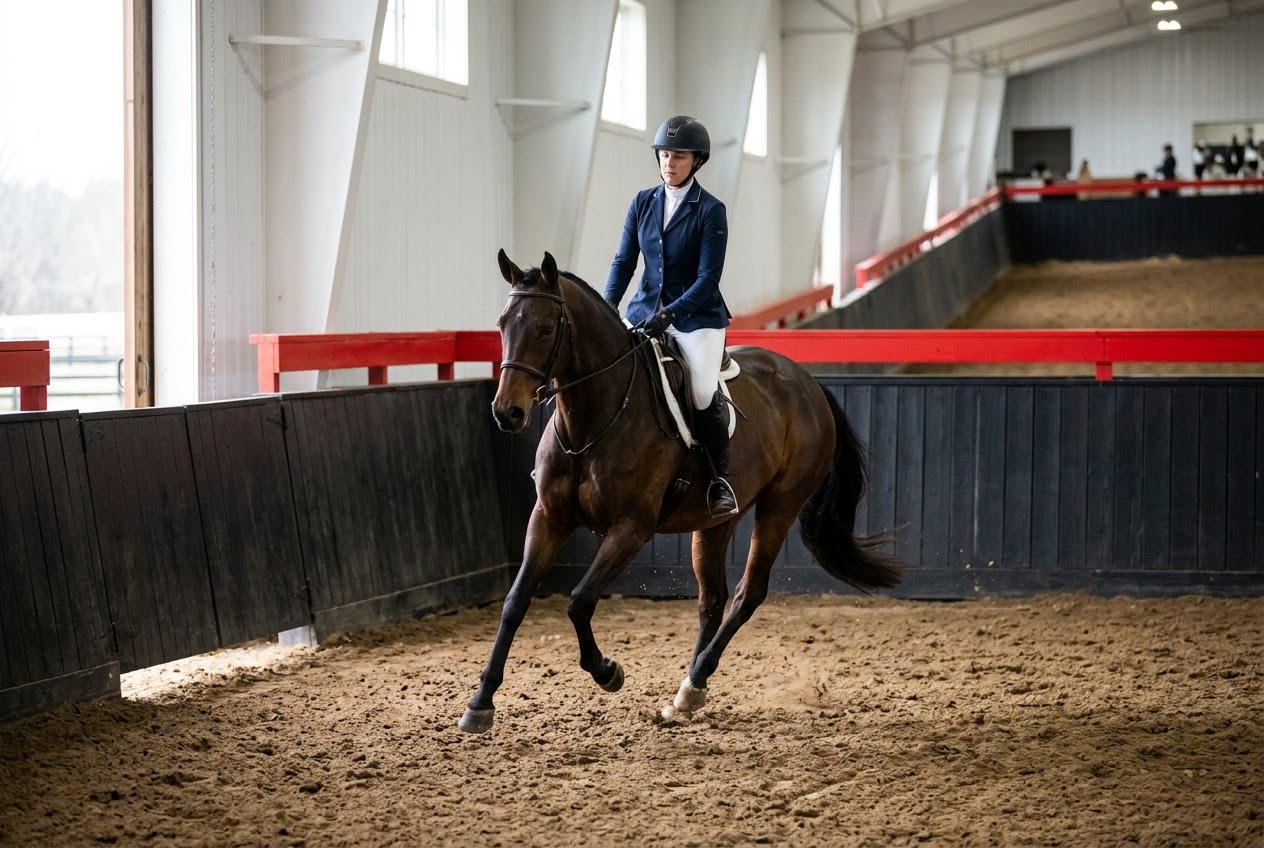
Flatwork In The Indoor
Lessons run through every season here, rain or shine, on footing dragged before each block.

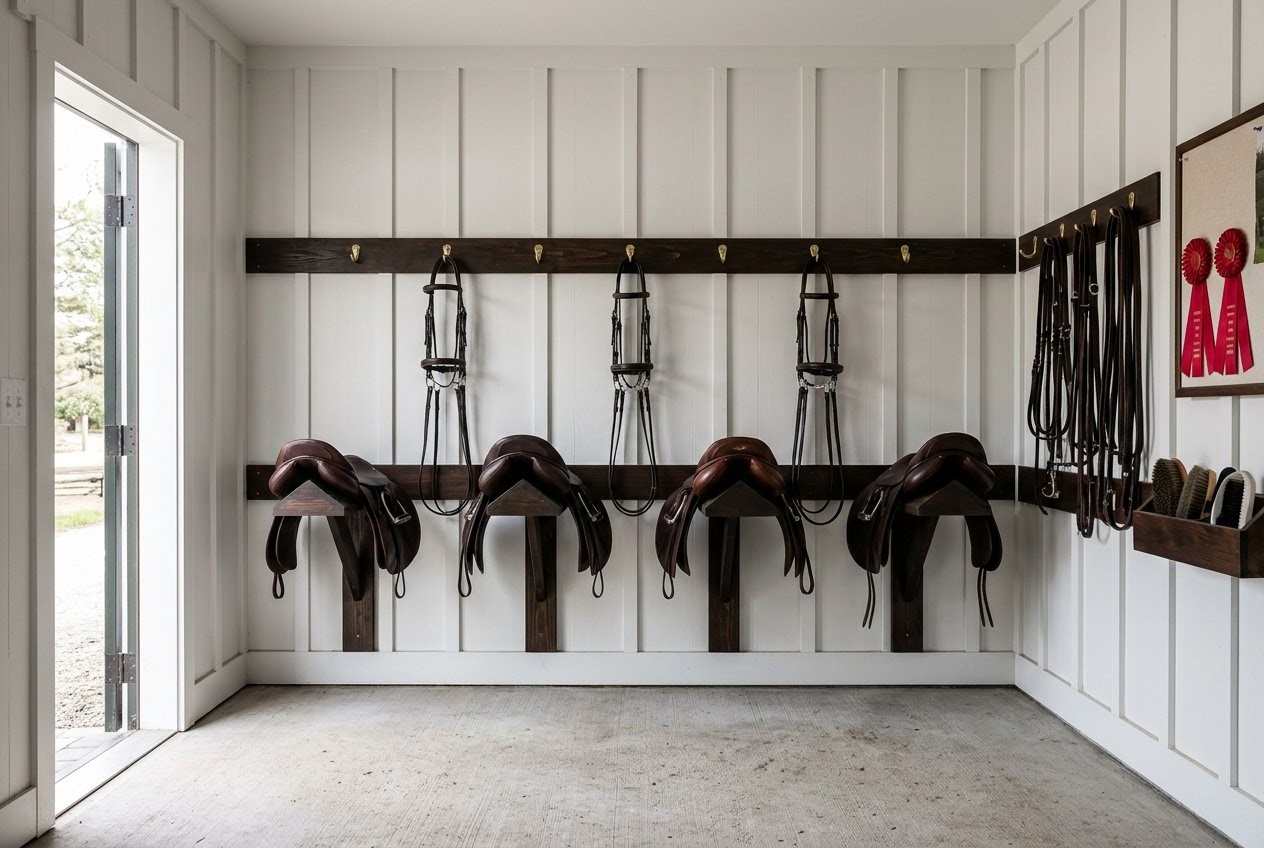
Tack Room Order
Every bridle on its own hook, cleaned after use. Tidy tack is the first thing riders learn.
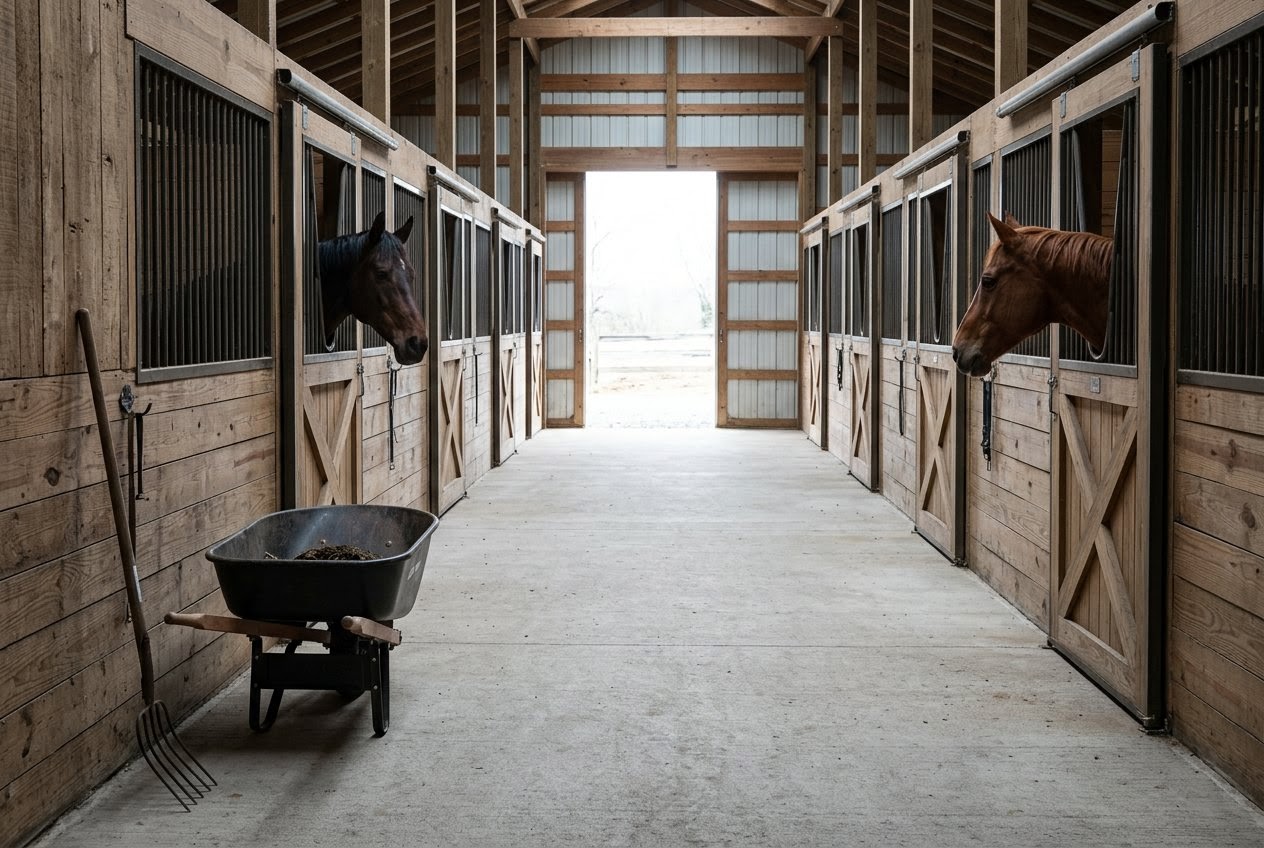
First Feed
The barn is awake long before the first lesson, with hay, water and turnout already handled.
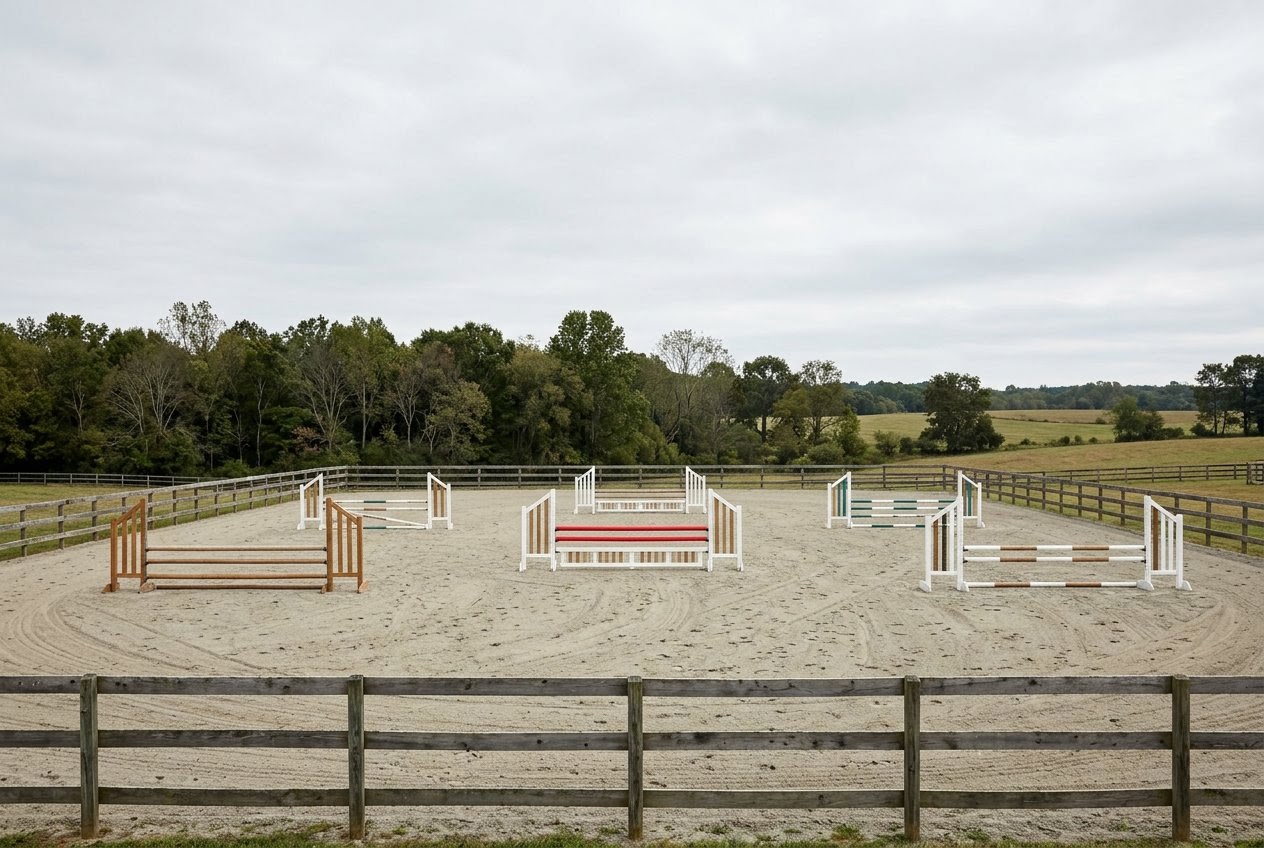
The Outdoor Ring
Courses go up for schooling days and stay up through show prep weekends.
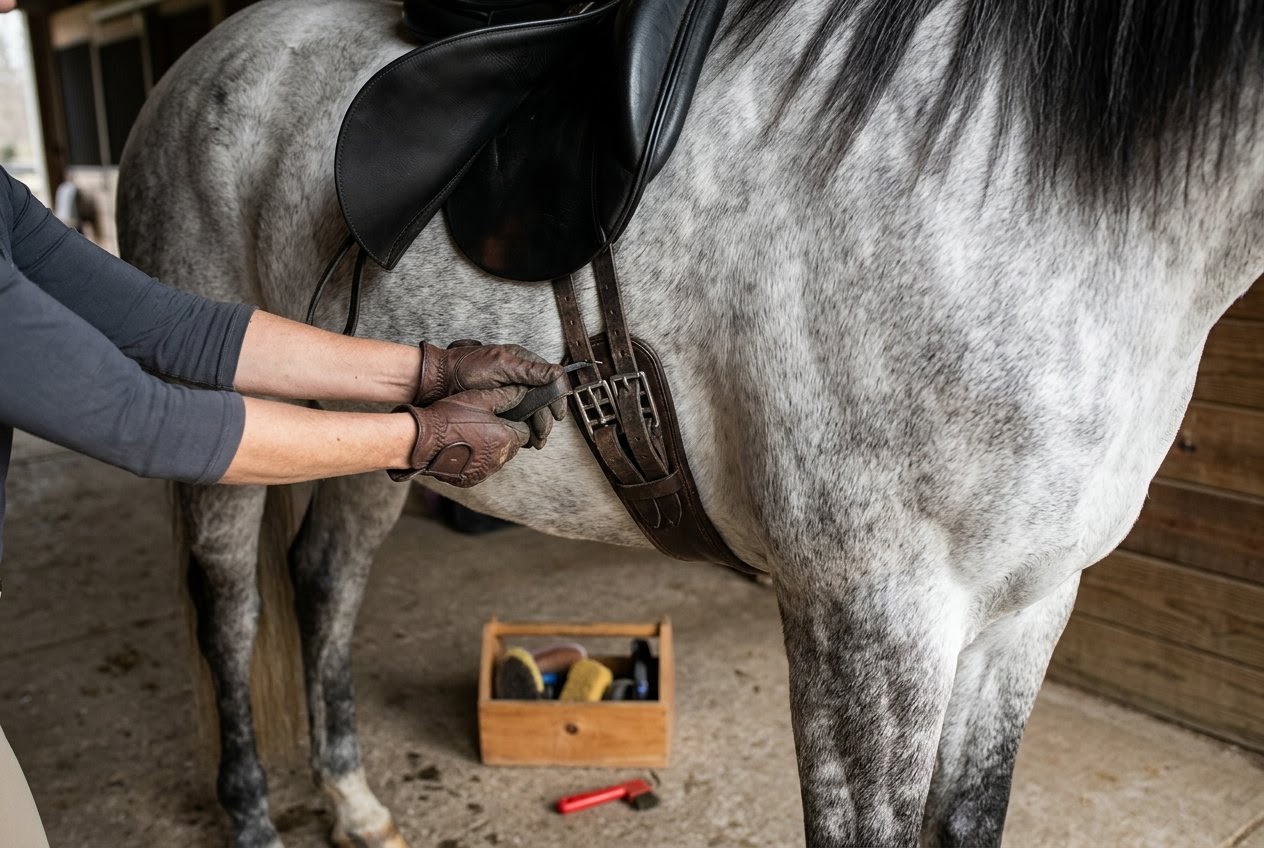
Before The Mount
Grooming and tacking up are part of the lesson, not a chore done for the rider.
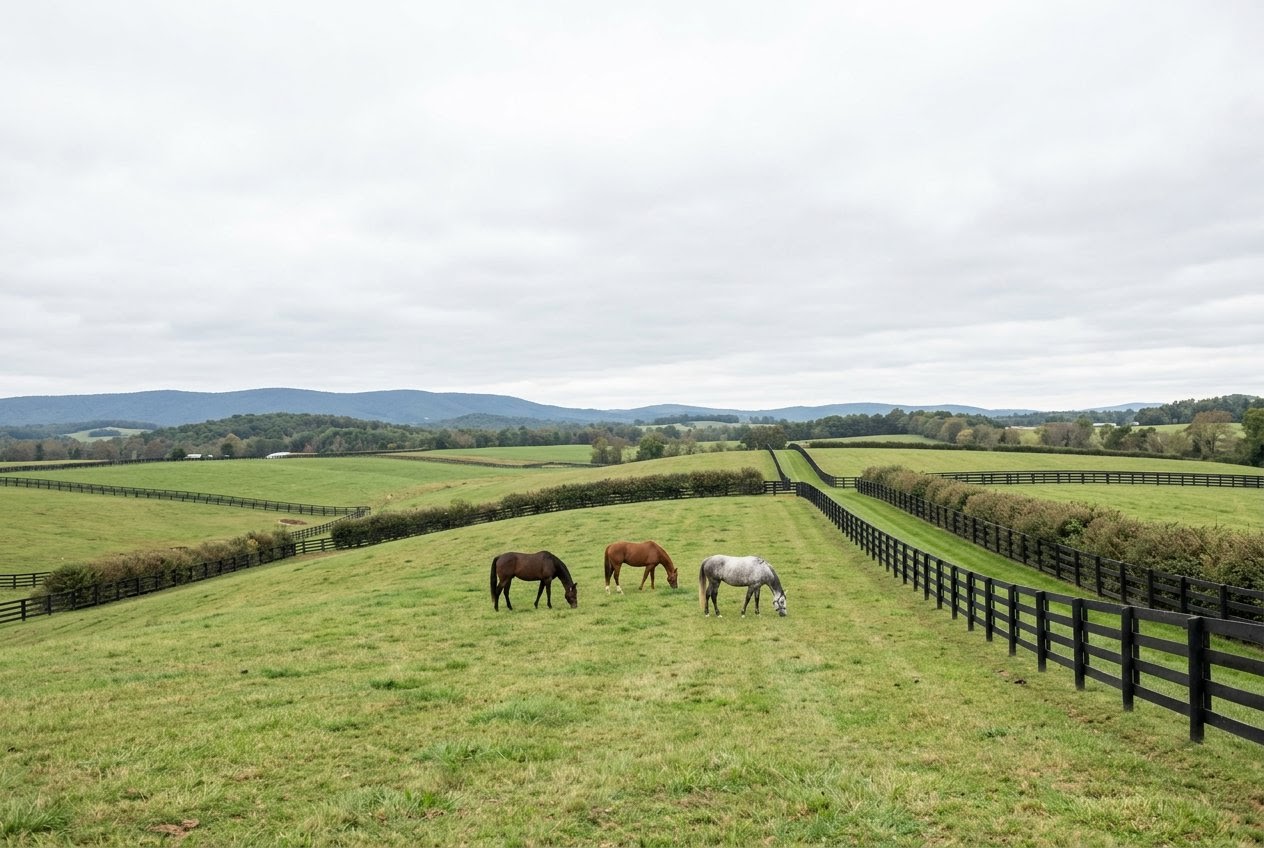
Turnout Fields
Daily turnout on rolling grass keeps our horses sound, settled and ready to work.
Farm Policies And Guidelines
A working barn runs on clear expectations, and ours are written down so every rider, boarder and visitor knows exactly where they stand.
Misty Brae Farm keeps a single standard for safety, horsemanship and shared space. These guidelines apply equally to lesson riders, Pony Club members, camp families, boarders and guests. Nothing here is a surprise on arrival: instructors review the essentials at the first lesson, and boarders receive the full agreement before a horse ships in.
Policies are reviewed each season with our instructors and barn staff, and posted updates take effect at the start of the following month.
Helmets And Riding Attire
ASTM/SEI-certified helmets are required for every rider under eighteen, mounted or lungeing, and strongly recommended for adults. Boots with a defined heel are required for all riders. Long trousers and a fitted top are expected in every lesson; loose jewellery and open shoes are not permitted in the barn aisle or arenas.
Tack And Equipment
School tack is fitted and maintained by farm staff and must be returned clean to its assigned rack. Riders using personal saddles are asked to have fit checked by an instructor before first use. Any equipment showing worn stitching, cracked leather or a compromised billet is pulled from service immediately and reported to the barn manager.
Arena Use And Hours
Scheduled lessons hold priority in both the indoor and the outdoor ring. Riders sharing an arena call their direction on entry and pass left shoulder to left shoulder. Jumps are set and lowered only with an instructor present. Arenas close during dragging and footing maintenance, and the indoor is reserved outright on show-prep and clinic days posted on the calendar.
Horse Care Responsibilities
Lesson riders groom and tack their own horse and untack, cool out and put away after riding, with help scaled to age and experience. Boarders keep vaccination, Coggins and farrier records current with the office, and coordinate veterinary visits through barn staff so treatment, turnout and feeding stay aligned across the day.
Boarding Agreements
Every horse on the property is covered by a signed boarding agreement setting out care level, turnout, feed and supplement handling, and notice periods. Changes to a horse’s programme, including an addition of training rides or a move between care tiers, are confirmed in writing with the barn manager before they take effect.
Guests And Visitors
Visitors are welcome and are asked to check in at the office on arrival. Children under twelve stay with an adult at all times, and no one enters a stall, paddock or arena without staff permission. Dogs remain leashed or in vehicles. Please do not feed any horse without asking first, as several are on managed diets.
Age, Skill Level And Liability
Lesson riders start from age six, and placement into group lessons, Pony Club activities and show divisions is set by an instructor evaluation rather than by request. A signed liability release is required for every rider and guest before any mounted activity, with a parent or guardian signature for minors. Equine activities carry inherent risk, and our staffing, footing and horse selection are managed with that reality in front of us.
The complete policy document, boarding agreement and release forms are available on request. Tell us which programme you are asking about and we will send the current versions.